
Best time and high seasonality
Compare recommended travel periods, typical demand seasons, weather comfort, and sky conditions across all twelve months.
- Average daytime high
- 30.5°C
- Average nighttime low
- 17.8°C
- Average rainfall
- 87.7 mm / month
2001–2020 climate averages for Momella foothills; Mount Meru is colder with increasing altitude. Gridded regional estimates, not a forecast or a park-wide measurement.
Weather and travel guidance
January brings warm intervals between showers around Momella, while cloud often gathers over Mount Meru later in the day. Forest paths can stay damp even when the open grassland is dry. Start a Ngurdoto viewpoint drive early for a better chance of seeing the mountain, then use the wooded circuit as temperatures rise. Carry a light waterproof for walks and protect cameras on a canoe outing. A pleasant morning at the lakes says little about conditions higher on Meru, where a climb needs its own mountain forecast.
February is usually one of the warmer, relatively drier breaks in Arusha's wet half of the year. Sunny spells suit the Momella lake circuit and early guided walks, but an afternoon shower remains entirely possible. The groundwater and montane forests retain shade and moisture, so shoes with grip are more useful than light city footwear. This is a workable month for combining a short park visit with a Meru climb, provided the climbing programme allows for colder upper slopes and cloud that can obscure the summit.
March is a transition into the long rains. Warm mornings can give way to substantial afternoon rain, and the forest tracks near Ngurdoto become muddy well before every open area looks wet. Build the day around the road circuit rather than promising a long walk or uninterrupted mountain views. A waterproof layer and a dry bag matter more than an extra viewpoint stop. Meru trekking becomes more weather-sensitive as the month progresses; discuss route conditions and turnaround decisions with the mountain guide.
April is generally Arusha's wettest travel period, with frequent rain, low cloud and slippery forest trails. Momella's open areas may brighten between showers, but Mount Meru can remain hidden and access on minor roads needs a fresh check. Keep a short visit flexible: forest wildlife and close-up vegetation are more dependable subjects than a clear mountain panorama. Do not squeeze a walking safari into a tight flight connection. Anyone climbing Meru needs proper rain protection, warm layers and time for slow footing.
May usually starts wet and becomes drier toward the end, although Arusha's forest and mountain slopes hold moisture after the surrounding plains improve. Expect cool starts, soft ground and occasional low cloud around Ngurdoto. A road-based visit works best with a flexible walking option rather than a fixed long hike. Pack a fleece as well as rainwear; damp air can make an open vehicle feel surprisingly chilly. Late-month conditions may suit Meru better, but trail reports are more useful than assuming the rains end on a date.
June marks a cooler, much drier phase around the Momella Lakes. Rain becomes less disruptive, yet morning cloud and mist can cling to Mount Meru and its forest belt. Plan a comfortable walking safari with a warm first layer that can be removed once the sun reaches the grassland. Dry roads make it easier to combine the lakes and Ngurdoto in one day without rushing. For a mountain extension, distinguish the mild lower park from the cold upper route: a dry-season label does not mean a warm summit or guaranteed views.
July is cool and predominantly dry, particularly on the open Momella circuit. Early game drives can feel cold in an open vehicle, and forest shade stays cool well after sunrise. Give walkers a fleece, closed shoes and water rather than dressing solely for an African summer. Clear spells can reveal Meru beautifully, but cloud still builds against the mountain. This is a useful month for an active park day or a properly equipped climb; allow unhurried stops for colobus monkeys instead of treating Arusha as a quick transit stop.
August remains mostly dry, with cool mornings and increasingly bright, warmer afternoons in the lower park. Dust can develop on the road circuit while shaded forest paths retain patches of damp ground. Carry layers for a morning walk and protect camera equipment between the Momella and Ngurdoto sectors. Mountain visibility is often best sought early, not promised for a particular hour. Visitor demand on the northern safari circuit is high, so reserve guides and any canoe session ahead while keeping the day responsive to wind.
September is among the brighter, drier months around Momella, with warmer afternoons than midwinter. It is a strong window for combining wildlife drives with a ranger-led walk, provided the walking portion starts before the hottest part of the day. Ngurdoto's forest offers shade, while the exposed lakeside needs sun protection and drinking water. Dust may soften distant views of Meru even without rain. A climbing itinerary still requires cold-weather equipment; the lower park's warming trend does not remove altitude effects.
October warms up before the short rains, and the timing of the first useful showers varies between years. An early-month visit can be dusty and bright; later outings may meet greener verges, cloud and a brief heavy downpour. Keep waterproofs accessible rather than buried in luggage, particularly for a Momella canoe or guided walk. Start with the most weather-sensitive activity and leave the forest drive flexible. Meru can create its own cloud even when the lakes look sunny, so judge mountain travel from a separate forecast.
November usually brings the short rains back to Arusha, making the lower park green and the forest especially lush. Showers often interrupt rather than occupy the whole day, but muddy tracks and cloud around Meru can change the pace of a visit. Prioritise short forest and lakeside circuits with sheltered breaks, and avoid selling an uninterrupted mountain-view day. Guided walks need grippy footwear and a lightweight waterproof. Canoeing depends on wind and storm conditions as well as rainfall, so leave room to move that session.
December is warm and green, with recurring showers and clearer intervals around the Momella Lakes. Mountain cloud can come and go quickly, rewarding an early viewpoint stop without making a clear Meru panorama certain. The forest is productive for patient primate watching, although wet leaves and dim light make photography slower. Choose a mixed day of short walks and vehicle time rather than an exposed all-day hike. Holiday demand can tighten guide availability even in rainy weather; book the activity while retaining weather flexibility.
- Travel recommended
- January to February, June to October
- Typical travel season
- Shoulder · June, November to February
- Weather comfort
- Good · January to February, June, October
How to read this: month icons show the typical sky and rain pattern; Weather grades broad travel comfort; Travel Seasons show typical demand and pricing. None is a forecast, and supplier periods vary.
Wildlife Overview
Wildlife to look for in Arusha National Park. Labels describe typical encounters in suitable habitat; season, conditions and time spent exploring all make a difference.
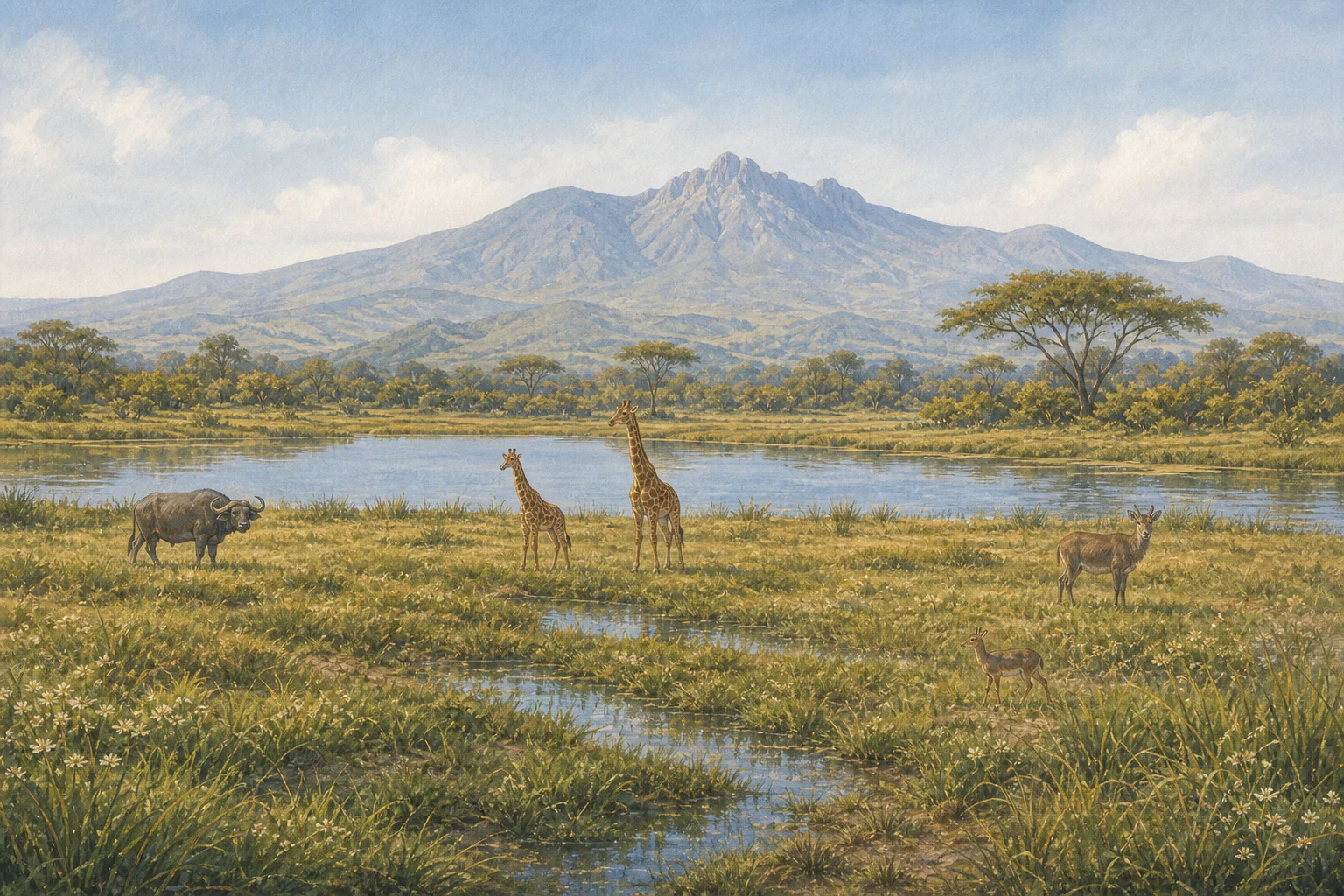
- Masai giraffeOpen glades and woodland margins on the lower park circuitLikelihood: Common
- African buffaloMomella grassland and Ngurdoto-area clearings; keep distance on walksLikelihood: Common
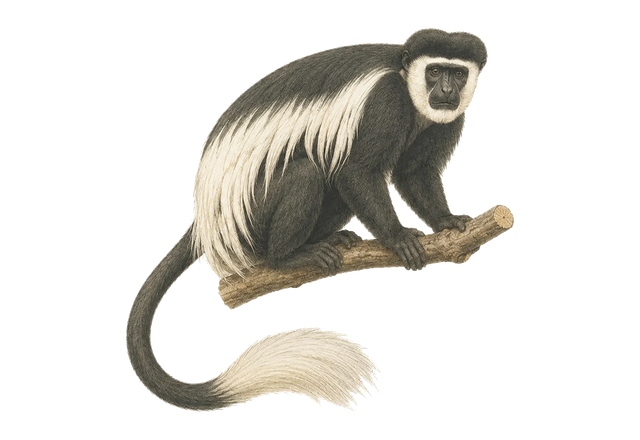
- Guereza colobusForest canopy around Ngurdoto and the lower Mount Meru slopesLikelihood: Common
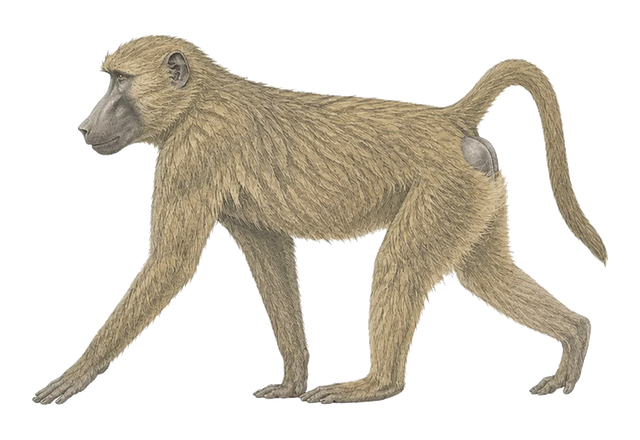
- Olive baboonForest edges and lower park roadsLikelihood: Common
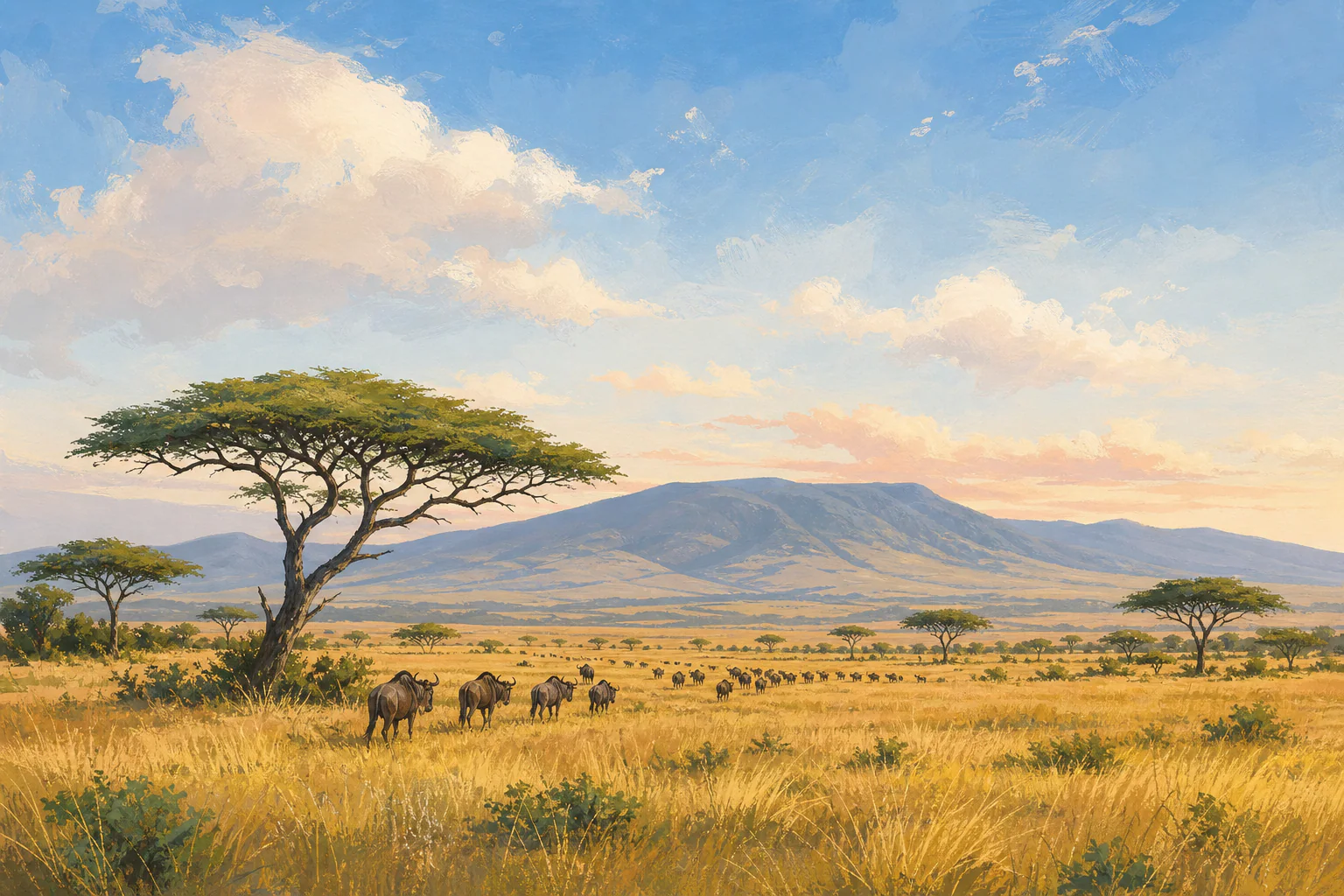
- Plains zebraLower-park grasslands, particularly the Serengeti Ndogo gladeLikelihood: Common
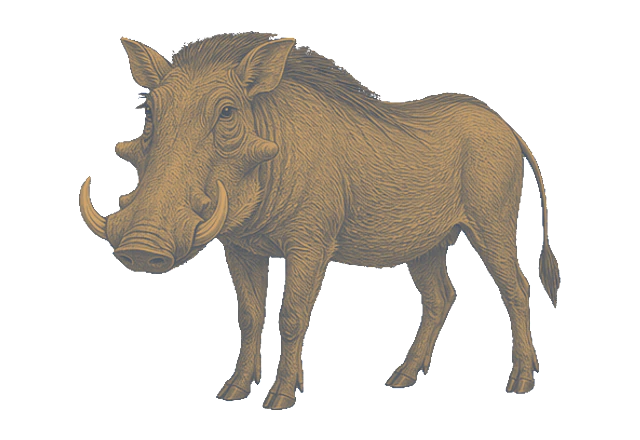
- Common warthogOpen grassy patches along the main wildlife circuitLikelihood: Common
- African bush elephantForested sectors; less dependable on a short lower-park visitLikelihood: Occasional
- LeopardElusive forest resident; not a realistic target for a brief day visitLikelihood: Very rare





Things to do in Arusha National Park
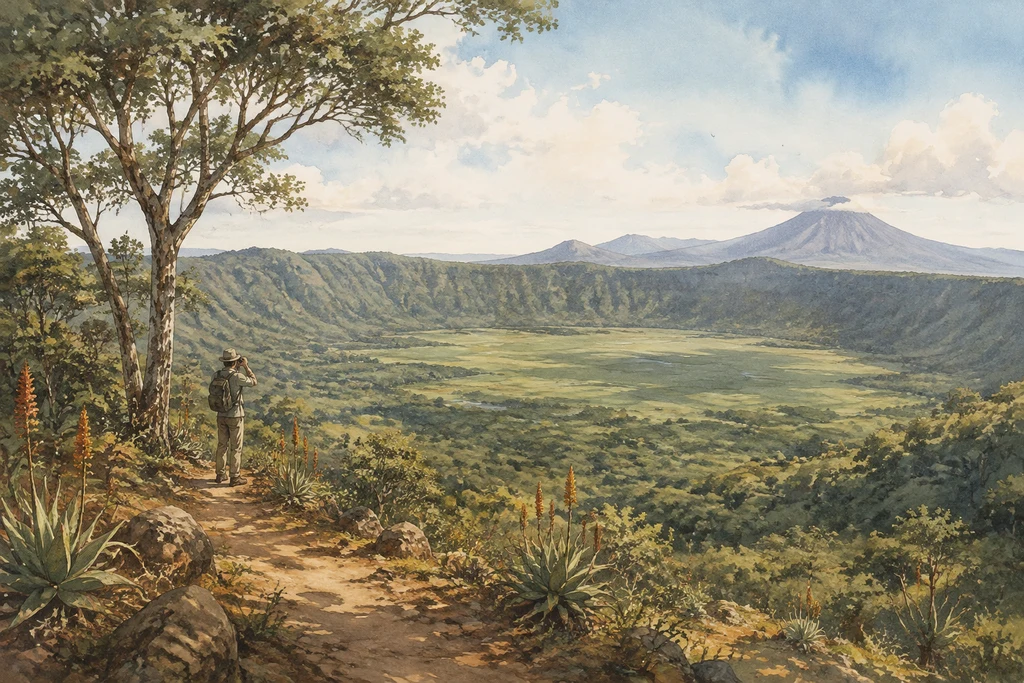
Ngurdoto Crater viewpoints
Follow the park's forest road to the viewpoints above Ngurdoto, looking into a wooded volcanic bowl rather than descending onto its floor. Stop along the approach for canopy movement and colobus monkeys. Allow time for cloud to shift if mountain scenery matters, and combine the viewpoints with the lower wildlife circuit instead of treating them as a long hiking route.
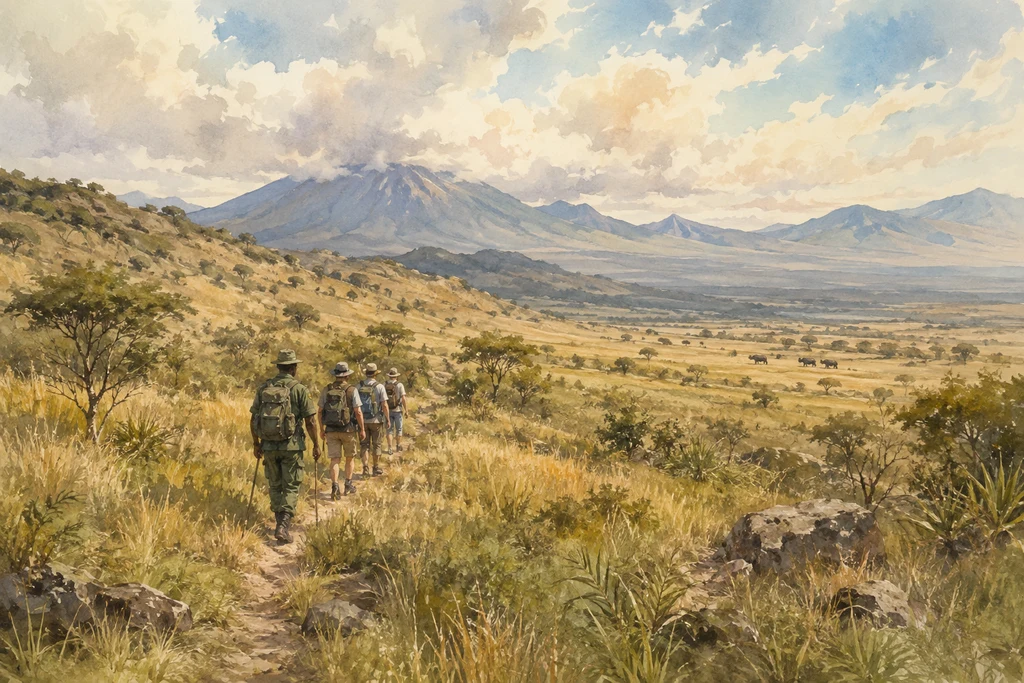
A guided walk near Momella
Trade the vehicle for a ranger-led walk through the lower park's grassland and forest margins. The interest is in tracks, browsing giraffes, birds and the change of scale when wildlife is encountered on foot. Choose an authorised route and a pace suited to the group; buffalo and other large animals make independent wandering inappropriate. Start early and wear closed shoes.
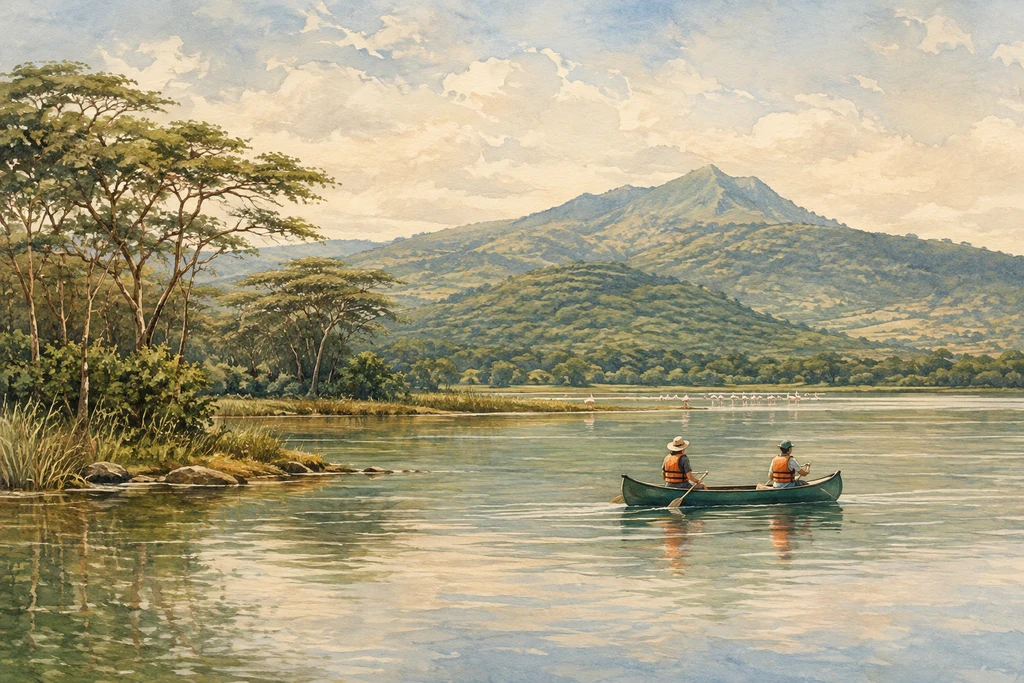
Canoeing on a Momella lake
A guided canoe outing gives a low, quiet view of the lakeshore and its waterbirds, with Mount Meru sometimes visible beyond the open water. Availability depends on the authorised operating area, water levels and wind, so reserve the session but keep its timing flexible. Take sun protection and a dry bag, and do not make a particular flamingo gathering part of the promise.
Habitats and flora
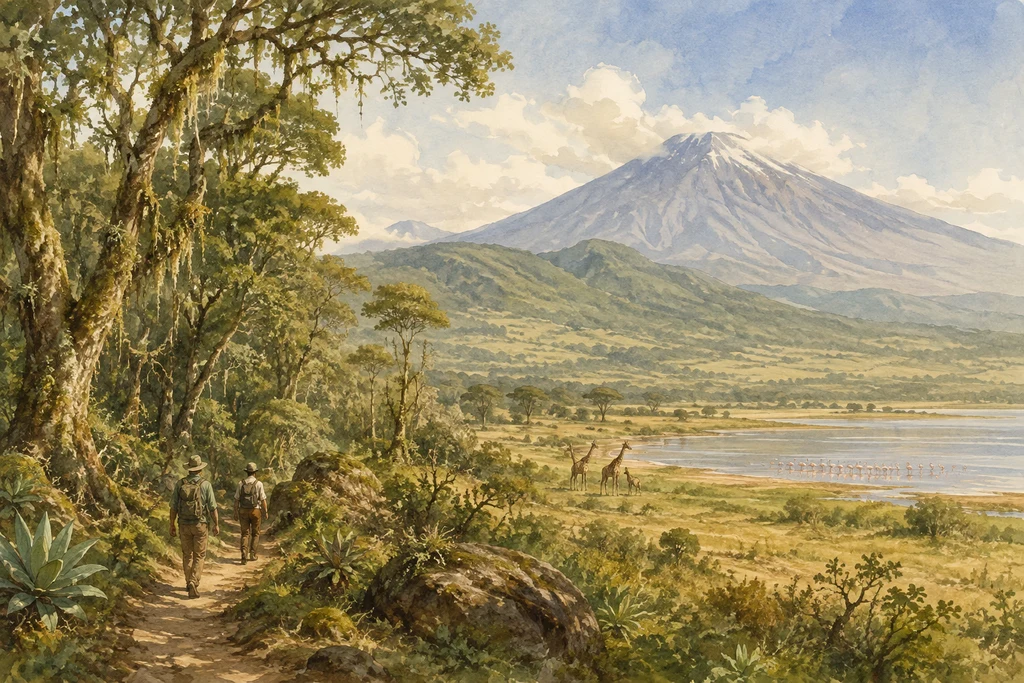
Arusha changes character over a short distance. Open glades around the lower park give way to cool forest on Mount Meru and the wooded rim of Ngurdoto Crater, while the Momella Lakes add shallow-water and marsh habitats. Giraffes browse along woodland edges; colobus monkeys are easier to look for in the canopy than on the grassland. Higher up Meru, montane forest yields to heath and exposed alpine terrain. That altitude range explains why a mild lakeside afternoon and a cold, cloud-bound mountain trail can occur on the same day. A mixed forest-and-lake circuit shows this contrast better than a drive aimed only at large mammals.
Park fees and restrictions
Planning reference rates · Jan 1, 2026 – Dec 31, 2026
Per person · International nonresident visitors · USD
| Visitor | Age | Park entry | Overnight fee | Camping fee |
|---|---|---|---|---|
| 1 adult | 16–99 years | USD 59 | USD 59 | USD 35 |
| 1 child | 5–15 years | USD 24 | USD 18 | USD 18 |
| 1 infant | Under 5 years | Free | Free | Free |
Tax treatment is not specified in this schedule. Overnight and camping fees are alternative additions to park entry; activity fees may apply separately.
Additional charges
- Vehicle Fee 2-3T
- USD 24 / Per vehicle in the stated weight category; confirm applicability
- MeisterCRM planning rates for foreign non-resident visitors, not an official tariff. Check the selected travel dates and age bands, and confirm final charges before booking.
- Entry is shown per person. Overnight and camping are alternative additions for the selected stay arrangement, not two charges to add together. “Not available” means a charge has not been established; it does not mean free. The planning workbook does not specify permit duration or re-entry rules; confirm the charging period and any repeat-entry fee before quoting.
- Tax treatment is unspecified. Vehicle, guide, specialist activity, transfer and other charges may apply separately. Activity eligibility and any minimum age must be checked separately from admission.
Official fee information
- Official TANAPA tariff verificationChecked Sep 7, 2026